
The certificate is the floor, not the ceiling
Montessori teacher education in the United States is held to a real standard. MACTE, the Montessori Accreditation Council for Teacher Education, has been recognised by the US Secretary of Education since 1995, and accredits the programmes that AMI, AMS, IMC and others deliver. Accreditation involves self-study, third-party comment and an on-site verification visit. It is not a formality.
So when a candidate holds a credential from an accredited programme, that means something. We treat it as a requirement, not a nicety.
But accreditation certifies the programme. It does not certify what a particular person took from it, or what they have done with it since.
That is the gap our screening exists to close. We have interviewed AMI-credentialled candidates who could not explain the materials in their own classroom, and found strong practitioners still completing their qualification. The certificate tells us someone was trained to a standard. The screening tells us how they have applied it.
What we are looking for, in order, is experience, judgement and maturity.
The material probe
The most reliable test of whether someone knows their environment is to ask them about it.
We name a material a Guide at their level should know, and ask what it is for.
For example, at Primary level, the spindle box.
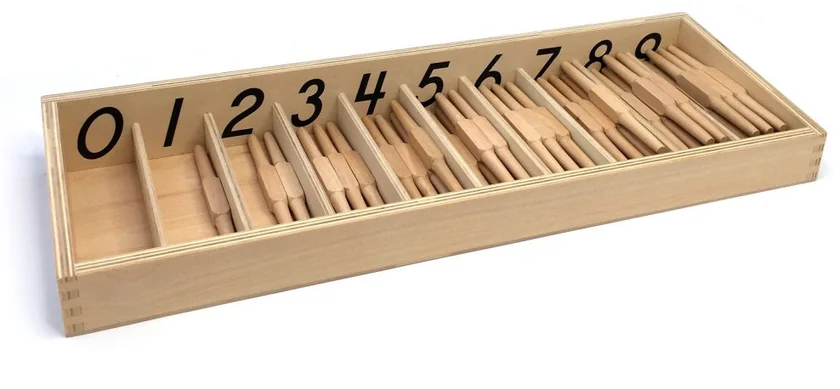
What is the objective?
One of them is the introduction of the concept of zero. A Guide who has taught with it knows that. A Guide who has not will describe counting, or say something general about numeracy.
A single weak answer is not disqualifying. Anyone can be caught off guard, and we are not trying to trip people up.
So we move to a different material and ask again. Then a third if we need to. One weak answer tells us nothing. A pattern tells us everything, and by the third material it is clear whether someone knows their environment or has learned the vocabulary around it.
This cannot be prepared for, and it is the reason our screeners are trainers. Knowing what a strong answer sounds like requires having heard a great many of them.
The philosophy
The same approach applies to the thinking underneath the practice. We ask about the guiding principles, and about the planes of development.
A Guide who cannot describe the planes, or describes them incorrectly, does not understand the framework their own practice rests on. That is not a gap that experience closes.
We also ask what they consider the most important aspect of Montessori at their level. The answer matters less than how it arrives. A candidate reaching for a principle in their own words has understood it. A candidate reciting one has not.
What else we ask about
A screening runs about an hour and moves from the practical to the philosophical. Alongside the probes above, we ask about:
- How they balance freedom and responsibility in a classroom, which is the central tension in Montessori practice
- How they see the role of an assistant, which tells us how they will work with your team
- How they handle conflict between children, and whether they observe before intervening
- What they do with a child who needs more support, which matters more now than it did five years ago
- Why they left each position, because the reason tells us more than the destination
- What they made of environments they have observed, including yours if they have seen it
Where an answer opens onto something difficult, we follow it. Some of the most useful things we learn are not on the prepared list.
Who screens
Screening is done by two of our team together, both qualified Montessori trainers. Between them they have two decades in Montessori: ten years each in classroom practice, and fourteen years training other teachers, which they continue to do.
Each prepares their own questions. One leads the conversation; the other comes in with what the first did not cover. They work from different experience, and the questions reflect that.
Where a judgement calls for depth beyond their own practice, they consult associates who have it. We are careful not to claim more than we can attest to.
Both review the recording afterwards.
They assess every candidate the way they would if they were hiring into their own school. Not whether someone would satisfy a client, but whether they would put this person in front of children they were responsible for.
What happens to the assessment
The school hires. We recommend. Our recommendation is the only reputation we have, which is why the purpose of screening is to eliminate rather than to supply.
If a candidate does not meet the standard, we do not put them forward. Not softened, not caveated, not sent along in case you like them. That is the whole service.
We also carry the consequence of getting it wrong. We invoice when your new Guide starts, not before, and if the placement does not hold within ninety days we run the search again at no further fee.
You receive a written summary: what the candidate said, and what it demonstrated. Not a transcript.
We record screenings with the candidate’s consent, and we will share a recording if you ask for it. We do not offer it as a matter of course. A candidate speaking freely to two trainers is doing so on the understanding that our judgement is what reaches you, rather than everything they said in an hour.